Moby-Dick is now considered a great classic of American literature and contains one of the most famous opening lines in fiction: “Call me Ishmael.” Initially, though, the book about Captain Ahab and his quest to catch a giant white whale was a flop.
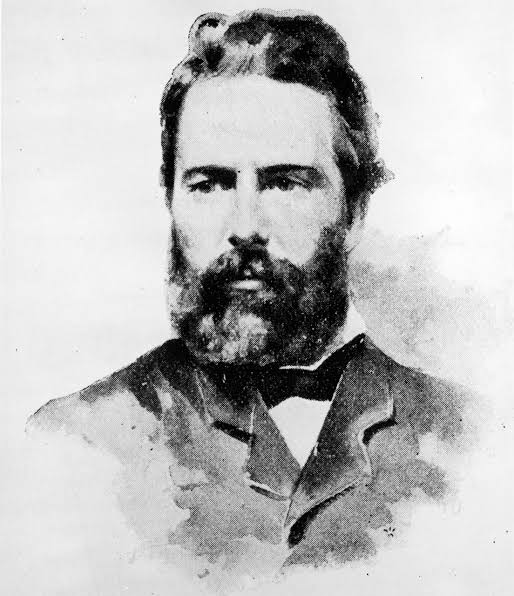
Its author, Herman Melville was born in New York City in 1819. As a young man, he spent time in the merchant marines, the U.S. Navy and on a whaling ship in the South Seas. In 1846, he published his first novel, Typee, a romantic adventure based on his experiences in Polynesia. The book was a success and a sequel, Omoo, was published in 1847. Three more novels followed, with mixed critical and commercial results. Melville’s sixth book, Moby-Dick, was first published in October 1851 in London, in three volumes titled The Whale, and then in the U.S. a month later. Melville had promised his publisher an adventure story similar to his popular earlier works, but instead, Moby-Dick was a tragic epic, influenced in part by Melville’s friend and Pittsfield, Massachusetts, neighbor, Nathaniel Hawthorne, whose novels include The Scarlet Letter.
Read the complete article on History.com.
Notable maritime and folk musician A.L. “Bert” Lloyd helped arrange and popularize traditional maritime working songs for the 1956 film adaptation of the book, notably popularizing the iconic chorus line “blood red roses” in the traditional shanty “Blood Red Roses”. Lloyd appeared in the film acting as a shantyman (sea-shanty leader) during the early sequence when the whaling ship Pequod is warped out of the harbor to begin its hunt.